Guía de Compra de Techo de Lamas: Qué Buscar Antes de Comprar
Criterios de selección: materiales, motorización, resistencia al viento y costes.
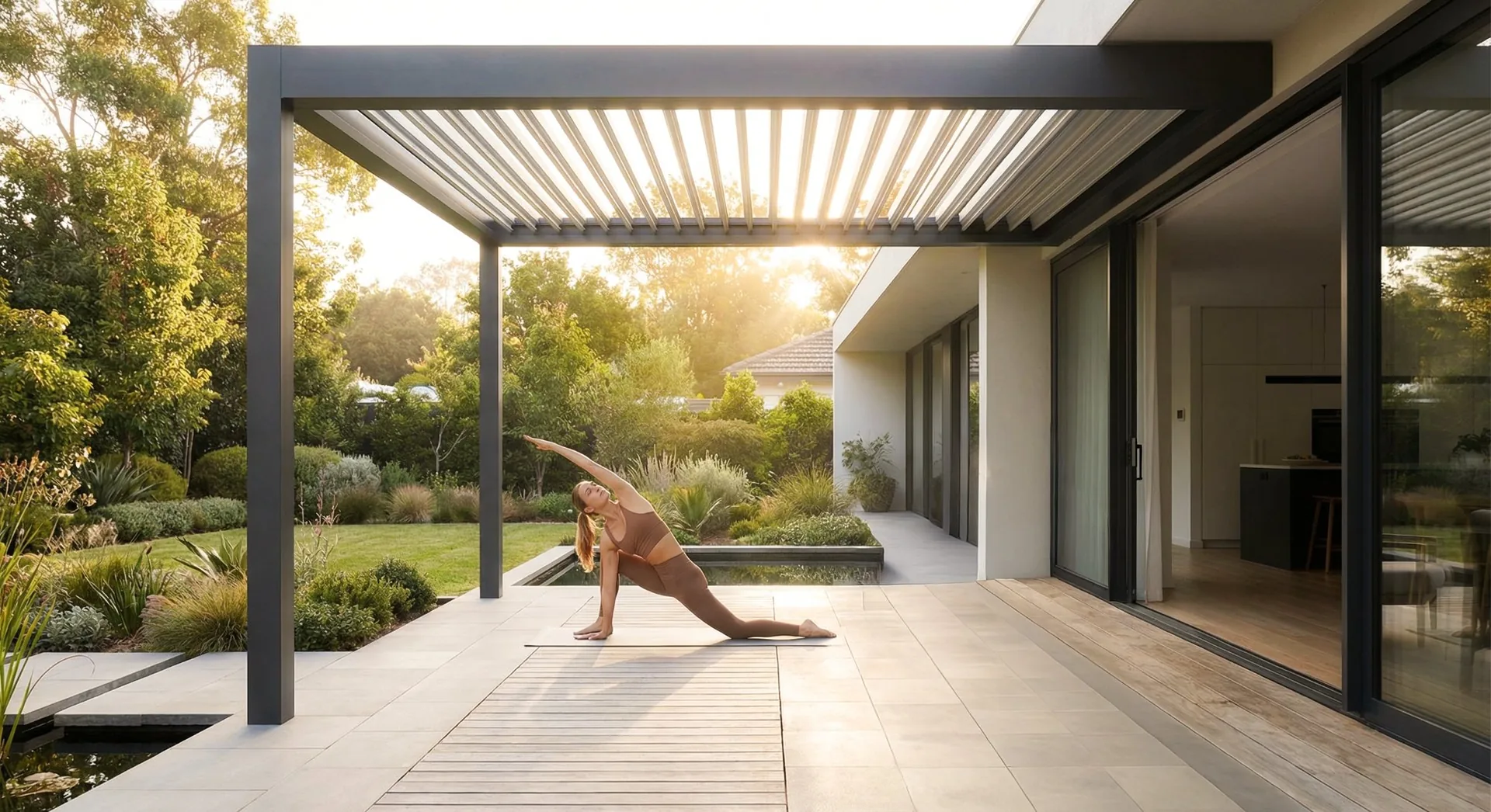
Buying a louvre roof pergola is a significant investment. This guide helps you make an informed decision.
Material: Why Aluminium Wins
Aluminium is the only material that combines corrosion resistance, low weight, structural strength and zero maintenance. Wood rots, steel rusts — aluminium lasts 30+ years without any treatment.
Louvre Opening Angle
The wider the angle, the more light and ventilation. The Luxa 700 opens to 115° — the current industry benchmark. Cheaper systems often stop at 90° or 105°, limiting airflow.
Drainage System
Premium systems route rainwater through concealed channels inside the columns. Budget systems use external gutters or drip edges. Ask for the drainage capacity in litres per minute.
Wind and Snow Ratings
In Europe, ask for EN 1991 certified load calculations. The Luxa 700 handles 150 kg/m² snow load and wind speeds up to 130 km/h. Budget systems rarely exceed 75–100 kg/m².
Motor Quality
Look for silent motors with integrated rain and wind sensors. Manual override (hand crank) should be available for power outages. The Luxa 500M offers a manual alternative with the same structural performance.
Coating Quality
Specify QUALICOAT Class 2 or TIGER Coatings for 15+ year colour retention. Cheap powder coats fade within 3–5 years. Ask for the coating thickness — 60–80 μm is standard, Alcodec applies 80+ μm.
Total Cost of Ownership
A quality louvre roof pergola costs more upfront but saves on maintenance. Factor in: no fabric replacement (unlike awnings), no repainting (unlike wood), no rust treatment (unlike steel). Over 15 years, the total cost is comparable to a budget solution that needs constant upkeep.
Conclusion
Choose a system with 115°+ louvre angle, concealed drainage, EN 1991 certification, QUALICOAT Class 2 coating and a reputable warranty. Alcodec offers all of this as standard.