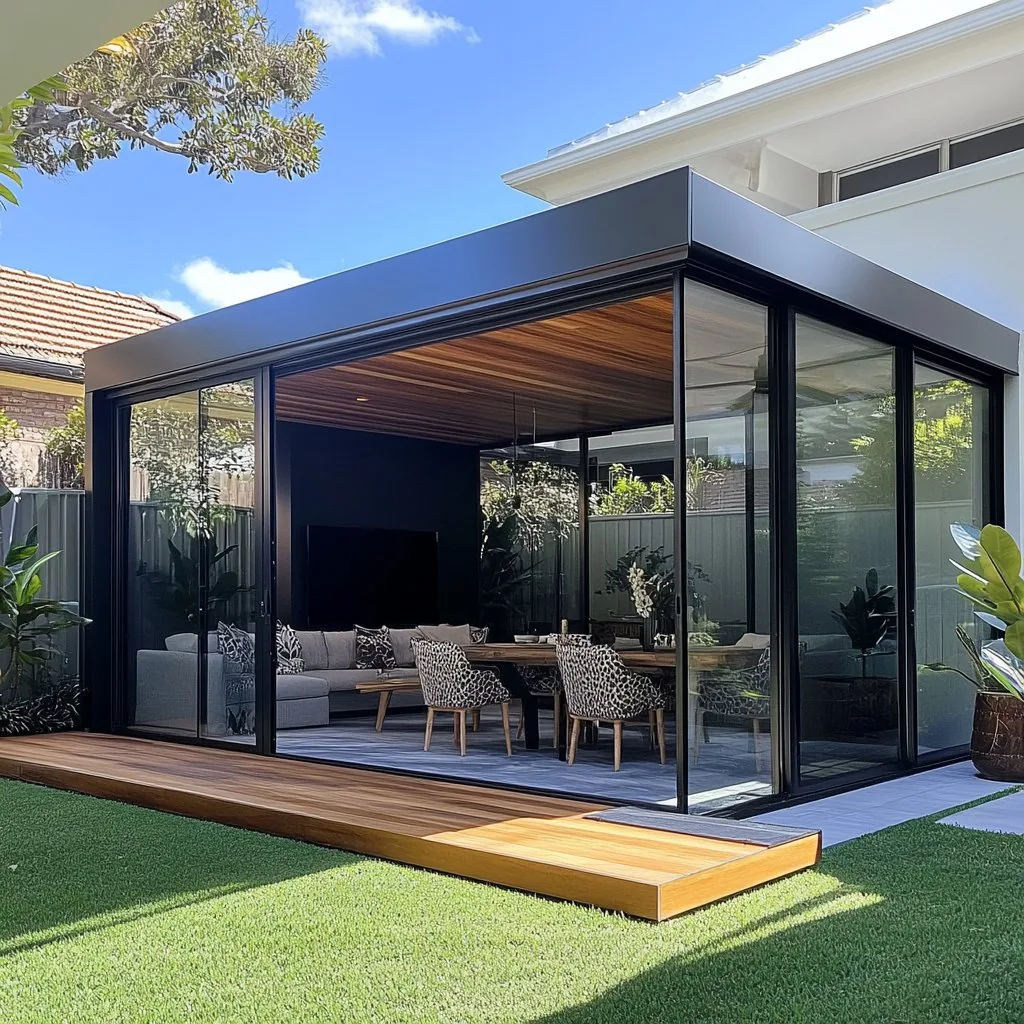
Puertas de Cristal Correderas vs Plegables: Guía Comparativa Completa
Comparación detallada de sistemas de cristal corredera y plegable para terrazas.
Lift-and-Slide Door Systems\n\nLift-and-slide doors use a lever mechanism to raise the door panel off its seal before sliding horizontally on a track. This design accommodates panels up to 400kg and widths of 3.2 metres per leaf. The flush threshold option (maximum 20mm) provides excellent accessibility compliance. Thermal performance reaches Uw values of 0.8-1.2 W/m2K with triple glazing. Maximum configuration allows openings up to 12 metres with 4 panels on parallel tracks.\n\n## Bi-Fold Door Systems\n\nBi-fold doors fold in concertina fashion, stacking to one or both sides of the opening. This creates a near-complete opening with up to 95% clear width. Standard panels are typically 800-1000mm wide, with configurations of 2 to 8 panels. Thermal performance is slightly lower than sliding systems at Uw 1.2-1.6 W/m2K due to more frame junctions. Maximum opening width reaches approximately 7 metres.\n\n## Pocket Sliding Systems\n\nPocket sliding doors disappear into a wall cavity when open, providing clean sight lines with zero stack projection. This premium option requires cavity construction during building phase. Panel weights up to 300kg are standard with motorised options available.\n\n## Cost and Specification Comparison\n\nLift-and-slide systems typically cost 15-25% more than equivalent bi-fold configurations. However, they offer superior weatherproofing, better acoustic performance (Rw 35-42dB vs 30-38dB), and lower maintenance requirements. Both systems are available in aluminium, PVC, or timber-aluminium composite profiles. Alcodec Alcodec glass systems complement both door types with matching glass railing and partition solutions.